
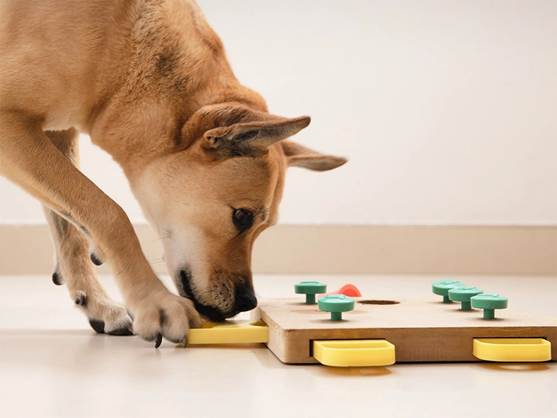
Mental stimulation can tire dogs more than physical exercise – a surprising fact many pet owners don’t know. Just 15 minutes of brain training equals about an hour of walking! Most pet parents focus on their dog’s physical needs but often overlook their cognitive health, which is a vital part of their wellbeing.
Your dog’s mental exercises go beyond optional enrichment activities. A mentally stimulated dog feels happier, more content and shows less stress and anxiety. Brain training helps keep your pet’s mind sharp and active. Your furry friend’s mental stimulation serves as the first defense against destructive behaviors caused by boredom.
This piece will help you understand why your dog’s brain needs regular workouts. You’ll learn what happens without enough mental challenges and practical ways to add brain games into your daily routine. The right mix of physical and mental activities can improve your pet’s behavior and quality of life, regardless of having an energetic puppy or a senior dog.
What mental stimulation really means for dogs
Mental stimulation includes any activity that challenges your dog’s problem-solving skills and critical thinking abilities [1]. Your dog’s brain needs just as much exercise as their body, even though physical exercise gets most of the attention. Let’s see what this means for your furry friend.
Mentally stimulated meaning explained
Your dog’s brain needs a workout too. Dogs are incredibly intelligent animals who need cognitive challenges to stay sharp and ready to participate [2]. Different parts of their brain light up during mental exercises, just like humans feel mentally tired after learning something new [2].
Problem-solving activities can really wear dogs out mentally. Research shows that can make a dog as tired as a full hour of physical activity 15 minutes of mental training[3]. This mental exhaustion works better at tiring out energetic dogs than just physical exercise.
Why dogs need more than just walks

How brain activity affects behavior
Mental stimulation and behavior share a deep connection. Physical exercise releases . This promotes new brain cell growth and increases blood flow to the brain brain-derived neurotrophic factor (BDNF)[6].
Dogs often develop frustrating behaviors without enough mental challenges. You might see them chewing furniture, digging holes, barking too much, or being hyperactive [2]. These behaviors don’t mean you have a “bad dog” – your pet’s brain just needs more stimulation.
Dogs that get regular mental exercise show amazing behavioral improvements. Studies show these dogs have less anxiety, reduced hyperactivity, and don’t destroy things as much [7]. On top of that, it helps dogs get along better with humans and other animals [5].
Senior dogs can fight off cognitive decline with consistent brain exercises, just like puzzles and new skills help aging humans [5].
The hidden effects of boredom on your dog’s health
Boredom doesn’t just make your dog uncomfortable—it can harm their health. Pet owners often don’t realize how much their dogs suffer from a lack of mental challenges. A bored pup is just the tip of the iceberg, and your dog’s overall well-being takes a hit over time.
Behavioral issues caused by lack of stimulation
Dogs who don’t get enough mental stimulation will make their own fun—usually in ways that drive us crazy. Your furniture might become their new chew toy, or your garden could turn into a dig site. These behaviors happen because dogs need to solve problems naturally. Without proper outlets, they’ll show these instincts through unwanted behaviors.
Some dogs start chasing their tails, licking too much, or running after shadows because their brains need more to do. These aren’t just bad habits—they’re desperate attempts to keep their minds busy. Even that non-stop barking might mean your dog needs more brain games in their daily life.
Emotional impact: anxiety and depression
Dogs can really struggle emotionally without enough to think about. They might get anxious and show it by pacing around or never settling down. Some dogs even get symptoms that look like depression—they become lazy, stop playing with others, and lose interest in things they used to love.
Your dog’s happiness depends on keeping their mind active. Dogs are smart social animals who evolved to work and solve problems with humans. That’s why puzzle toys aren’t just fun—they’re vital for your dog’s emotional health.
Cognitive decline in senior dogs
Older dogs need brain exercise more than ever. Just like people, dogs’ minds can slow down with age. Regular mental workouts can help keep their minds sharp longer. Brain games help senior dogs maintain their thinking skills and neural connections.
Senior dogs who don’t get enough mental challenges might get confused more often, feel disoriented, and have trouble sleeping. Age-appropriate puzzles and games can help keep their minds active, much like how crosswords help older people stay sharp.
How to mentally stimulate your dog at every life stage
Your dog needs different types of mental stimulation at each stage of life. A puppy learning about the world has different needs than a senior dog working to keep its mind sharp. The right brain exercises matched to your dog’s age will make a big difference in its development and happiness.
Puppy mental stimulation ideas
A puppy’s developing brain works like a sponge that soaks up new experiences. Young puppies can learn basic commands like “sit” or “down” through short, fun training sessions that leave them eager to learn more. Brain games help develop memory and problem-solving skills while reducing destructive behavior. You can play hide-and-seek games with treats under cups or containers to encourage their natural exploration instincts. Your puppy’s exposure to new environments, people, and other animals is a vital part of socialization that prevents anxiety or reactivity later in life.
Mental stimulation for adult dogs
Adult dogs need regular mental challenges, especially high-energy working breeds like Border Collies and Australian Shepherds. New walking routes keep things interesting, and “sniff breaks” let your dog explore different scents. Puzzle toys that release treats after solving them provide great independent play options. Dog sports like scent work, rally obedience, or fast CAT help channel energy in positive ways. Teaching new tricks remains valuable throughout your dog’s adult years.
Mental exercises for senior dogs
Mental engagement helps senior dogs fight cognitive decline. Research shows that 28% of 11-12 year old dogs and 68% of 16 year old dogs show signs of . Gentle puzzle games, scent work, and learning simple new tricks help maintain brain function. Your aging dog’s brain health improves with a mix of moderate physical activity and mental challenges.canine cognitive dysfunction
How to mentally stimulate your dog indoors
Bad weather or limited physical exercise makes indoor mental stimulation important. You can create DIY games like muffin tin puzzles with treats hidden under tennis balls, rolled towel treat dispensers, or cup games. Your dog’s toys stay exciting when you rotate them – keep just a few out and store the rest. Playing hide-and-seek with treats or yourself helps develop problem-solving skills and natural hunting instincts. Mental exercises often tire dogs out more than physical activities alone.
Tools and toys that boost your dog’s brain power
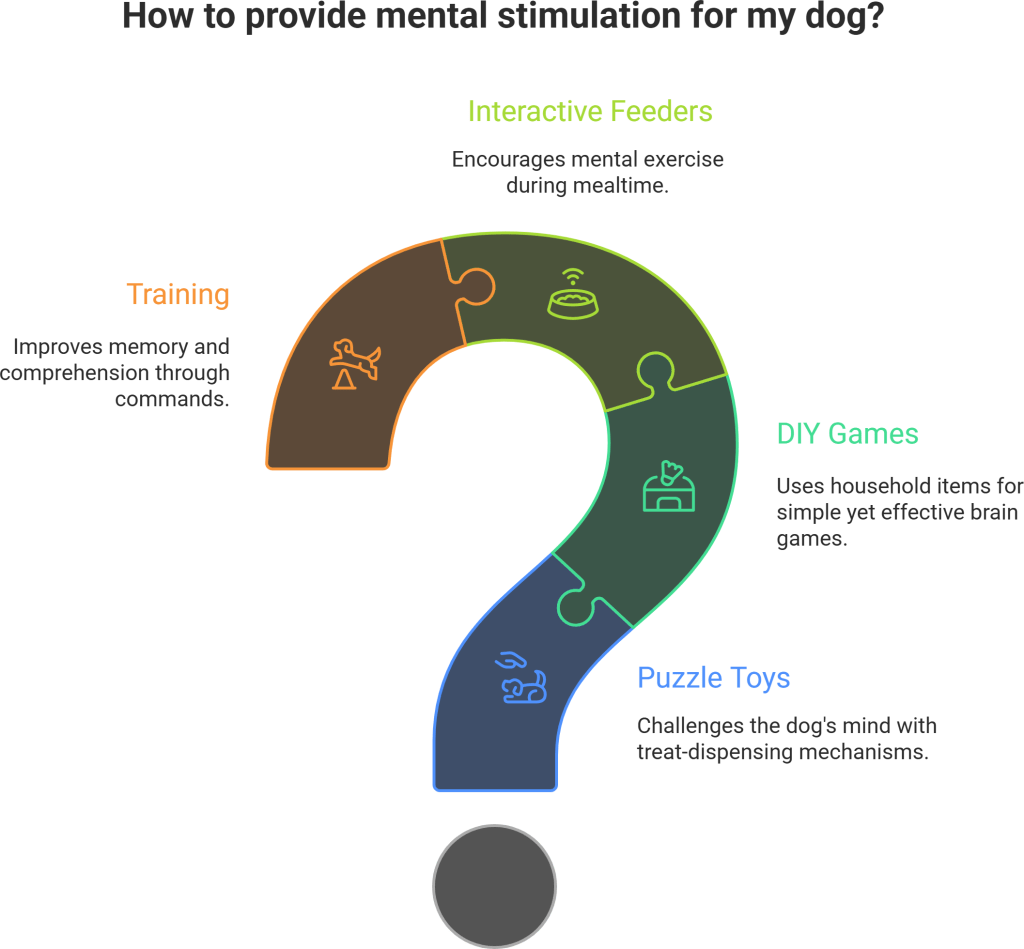
Your dog’s behavior and happiness improve when you invest in the right cognitive development tools. The market has many options that test your pet’s problem-solving skills while keeping them busy.
Conclusion
Mental stimulation is just as crucial as physical exercise for our canine companions. Brain challenges prevent destructive behaviors, reduce anxiety, and boost the overall quality of life for dogs of all ages. Without doubt, cognitive activities are a quick solution for busy pet parents – just 15 minutes of mental training equals an hour of physical exercise.
Dogs have natural instincts that need more than daily walks to stay satisfied. Puzzle toys, training sessions, and scent games help meet these deeper needs. Your dog will show fewer behavioral problems and better emotional health with proper mental challenges. On top of that, senior dogs gain tremendous benefits from cognitive activities that help prevent age-related mental decline.
Mental stimulation doesn’t need expensive equipment. A little creativity turns simple household items into brain games. Your muffin tins, empty bottles, and homemade obstacle courses work just as well as store-bought options.
The right mix of physical and mental exercise are the foundations of raising a happy, well-adjusted pet. This balance should match your dog’s age, breed, and personality. A mentally stimulated dog becomes a better companion and lives a richer, more rewarding life. You’ll see positive changes in your furry friend’s behavior quickly when you start with just a few minutes of brain games each day.
Key Takeaways
Understanding your dog’s mental needs is just as crucial as meeting their physical exercise requirements. Here are the essential insights every dog owner should know about cognitive stimulation:
• Mental exercise is surprisingly powerful: Just 15 minutes of brain training equals about one hour of physical walking, making cognitive activities highly efficient for tired, busy pet parents.
• Boredom creates serious behavioral problems: Dogs without adequate mental stimulation develop destructive habits like excessive chewing, digging, and barking as their understimulated brains seek engagement.
• Every life stage needs different mental challenges: Puppies benefit from socialization and simple puzzles, adults need complex problem-solving activities, while seniors require gentle brain games to prevent cognitive decline.
• DIY solutions work as well as expensive toys: Household items like muffin tins with tennis balls, empty bottles, and towels can create effective mental stimulation games without breaking the budget.
• Mental stimulation improves emotional health: Regular brain exercise reduces anxiety, prevents depression-like symptoms, and helps dogs socialize better with humans and other animals.
The key is consistency rather than complexity. Start with just a few minutes of daily mental challenges, and you’ll quickly notice improvements in your dog’s behavior, mood, and overall quality of life. Remember, a mentally stimulated dog is not only happier but also experiences a richer, more fulfilling existence.
FAQs
Q1. Why is mental stimulation crucial for dogs? Mental stimulation is essential for a dog’s overall well-being. It helps reduce stress, prevent boredom, and burn excess energy. Regular brain exercises can improve behavior, enhance emotional health, and even slow cognitive decline in older dogs.
Q2. How can I tell if my dog needs more mental stimulation? Signs that your dog may need more mental challenges include excessive excitement at small triggers, frequent pacing, obsessive licking, chewing on unusual items, whining without apparent reason, or demanding attention more than usual. These behaviors often indicate boredom or understimulation.
Q3. What are some effective ways to mentally stimulate my dog? There are many ways to provide mental stimulation, including puzzle feeders, scatter and sniff games, stuffed food toys, and training sessions. You can also create DIY games using household items like muffin tins or empty bottles. Rotating toys and introducing new challenges regularly helps maintain interest.
Q4. Do different dog breeds require varying levels of mental stimulation? While all dogs benefit from mental stimulation, high-energy working breeds like German Shepherds, Dalmatians, and Border Collies typically require more cognitive challenges. However, it’s important to tailor activities to your individual dog’s age, personality, and energy level.
Q5. How does mental stimulation compare to physical exercise for dogs? Mental stimulation can be surprisingly effective in tiring out dogs. In fact, about 15 minutes of mental training can be as exhausting for a dog as an hour of physical exercise. While both are important, combining mental and physical activities provides the best overall stimulation for your dog’s health and happiness.
References
[1] – https://www.masterclass.com/articles/mental-stimulation-for-dogs
[2] – https://www.petmd.com/dog/general-health/ways-to-keep-dog-mentally-stimulated
[3] – https://www.spca.com/en/canine-stimulation/
[4] – https://www.jensenbeachveterinary.com/2025/04/01/why-walking-your-dog-is-more-than-just-exercise/
[5] – https://petitepupdaycare.com/the-importance-of-mental-stimulation-for-dogs/
[6] – https://www.akc.org/expert-advice/health/dog-exercise-mental-health/
[7] –https://fotp.com/learn/dog-health/physical-vs-mental-exercise-for-dogs—whats-the-difference
 Clear Peak Marketing
Leave a comment