

Dog daycare offers benefits way beyond the reach and influence of just having someone watch your furry friend during your absence. Puppies experience a crucial socialization period between 3 and 14 weeks old . Your dog needs regular social interaction throughout its life. Research proves that dogs with exposure to diverse, positive experiences show lower cortisol levels – the hormone connected to stress.
The evidence about dog daycare’s role in socialization speaks for itself. Dogs need consistent exposure to other dogs and humans to maintain their social skills and confidence, similar to humans who thrive on regular social interaction . Quality dog daycare introduces your pup to different dogs and people in a supervised, structured setting . Our experience shows that regular interaction teaches proper behaviors, builds confidence, and stops anxiety and aggression from developing .
A well-exercised dog becomes calmer and more content – and that’s exactly what dog daycare provides . The impact on socialization is undeniable. Quality facilities let dogs participate in supervised play sessions that serve as natural energy outlets . This reduces their loneliness by a lot and enhances their overall well-being .
What Makes Dog Daycare More Than Just Basic Care
Dog daycare facilities provide much more than a place to leave your pet while you’re busy. These specialized environments do much more than feed and walk your four-legged friend. Quality dog daycare stands apart from simple pet care services in several ways.
Understanding the role of socialization
Scientific research confirms that dogs are highly social animals with complex emotional and cognitive abilities [1]. Your dog needs proper socialization throughout life, not just as a puppy. Puppies have a critical socialization window between 3-14 weeks, but adult dogs need continuous exposure to different stimuli. This helps them maintain positive behaviors and prevents them from developing fear-based reactions [1].
Play is a vital part of how dogs socialize. Your pet learns appropriate play styles and gets better at reading social cues through regular interaction with other dogs [1]. Studies show that structured playtime reduces cortisol levels (a stress hormone) while boosting dopamine and serotonin—hormones that make dogs feel happy and relaxed [1].
Dogs that spend time with different breeds, sizes, and play styles learn to communicate better and are less likely to show aggression [1]. These interactions build their confidence and help them adapt to new situations easily.
Why dogs need more than food and shelter
Dogs were bred as working animals for hunting, herding, protection, and guarding throughout history [2]. Most domesticated dogs today don’t have jobs [2]. Dogs often develop behavioral problems because they don’t have proper outlets for their energy and natural instincts.
Pack animals by nature, dogs thrive on companionship [1]. They can become depressed, bored, and anxious when left alone too long [1]. Daycare gives your pet companionship, play, and structured activities that keep them mentally and emotionally active all day.
Shy dogs or those with negative past experiences find a safe space at doggy daycare. This controlled environment lets them build confidence gradually [1]. A 2015 study in Applied Animal Behavior Science found that dogs in regular play sessions showed fewer stress behaviors like excessive barking and destructive chewing [1].
How structured environments support development
Dog trainers use “structure” to describe consistent rules, dependable leadership, and guidance [3]. Clear routines substantially reduce stress levels—the main cause of problem behaviors in dogs [3]. Dogs feel secure with clarity and consistent patterns that build calmness and trust [3].
Structured daycare creates a safe space for dogs and reduces their stress through predictable routines and controlled interactions [1]. These elements support development:

Mental stimulation through structured activities helps reduce destructive behaviors caused by boredom. Dogs become skilled at new tasks and develop emotional resilience and adaptability [1]. Your dog builds vital life skills in this supportive environment instead of just passing time.
Key Social Benefits of Dog Daycare
Quality dog daycare facilities offer more than just a place for dogs to spend time. These places create amazing social ecosystems where dogs build life skills. Your dog’s world view changes through the lasting positive effects of daycare.
Improved dog-to-dog communication
Dogs that play with other dogs regularly become experts at understanding canine body language. They learn to read and respond to subtle signals like ear positions, tail movements, and play bows [4]. This skill helps them avoid conflicts and build better relationships.
Play sessions give dogs a chance to practice reading social cues that humans might miss. They learn to tell the difference between playful, neutral, and aggressive behaviors [5]. Dogs also figure out what they like best – some love high-energy play while others prefer quieter interactions [4].
The American Veterinary Medical Association’s research showed dogs in regular group settings had 40% fewer behavioral issues compared to dogs who only spent time with humans [6]. These numbers prove how much dogs learn from each other in well-laid-out environments.
Reduced fear and anxiety in new settings
Dogs become more adaptable to new situations through regular daycare visits. Their fear of unknown things slowly fades as they meet different dogs and people [4]. The confidence they build at daycare helps them everywhere else.
Dogs do best with routine, and good daycares provide exactly that [4]. Their structured environment cuts down stress by offering:
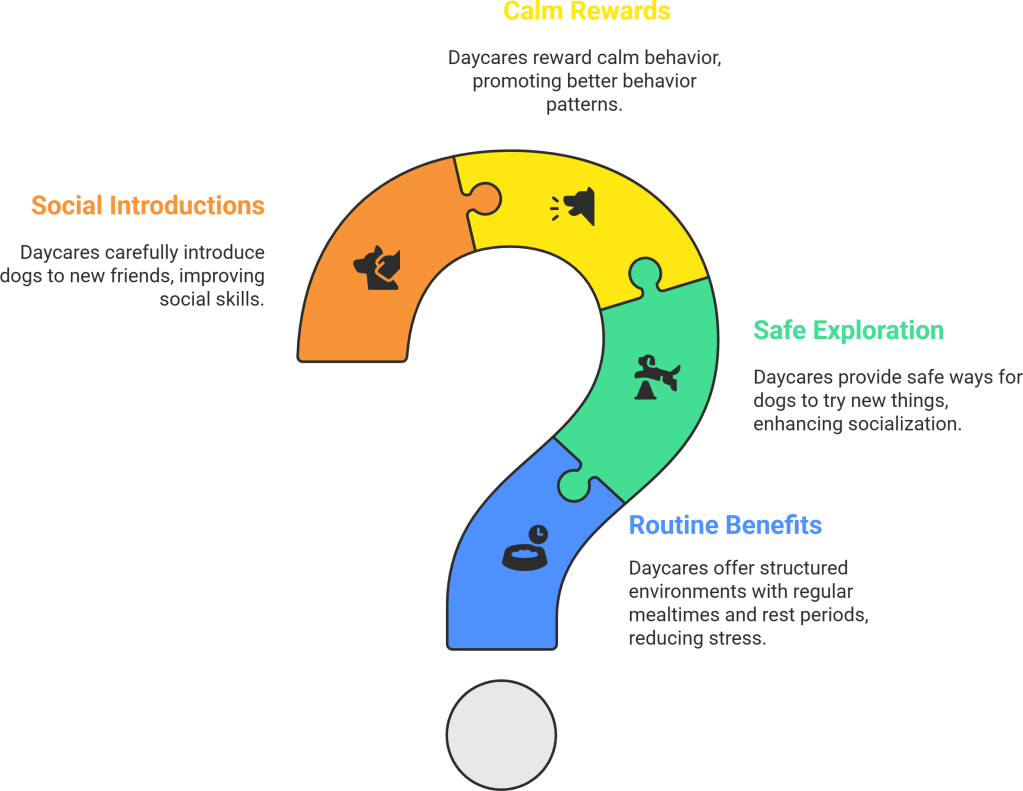
Research shows that regular social time substantially lowers cortisol levels while boosting dopamine and serotonin—the chemicals that make dogs feel happy and content [7]. Even shy dogs become more confident through these good experiences.
Better behavior through peer learning
The sort of thing I love is how dogs pick up behaviors from watching each other. Dogs in daycare see their well-behaved friends and start copying them [4]. This way of learning often works better than human training alone.
“Dogs naturally teach each other appropriate play and communication,” explains Dr. Sarah Martinez, an animal behaviorist. “A well-managed group setting provides constant feedback that shapes behavior more effectively than isolated training sessions.” [6]
Dogs learn vital social skills at daycare including:

These new skills show up at home too. Dogs with regular daycare time usually have better self-control, manners, and fewer behavior issues [2]. Good habits from daycare carry over to home life, creating an ongoing cycle of improvement.
Your dog’s confidence and flexibility grow through these social experiences. The mix of interactions at daycare helps them handle new situations better—whether it’s meeting house guests, seeing unfamiliar dogs on walks, or dealing with schedule changes.
Mental and Physical Health Improvements
Quality dog daycare not only brings social advantages but also provides health benefits that can make a huge difference in your dog’s life. Let’s get into how these well-laid-out environments help create a healthier and happier furry friend.
Daily exercise routines and energy release
Your dog’s health depends on physical activity. Regular exercise at daycare builds stronger muscles, helps heart function, and keeps their weight in check [8]. Dogs get consistent, tailored exercise that matches their energy and play style, unlike the random walks they might get at home.
Most high-energy breeds need more exercise than they get at home, especially when their owners are busy [9]. Dogs can burn off their extra energy in productive ways through daycare’s outdoor spaces and fun activities [10]. This daily exercise helps prevent weight issues, makes digestion better, and keeps their joints healthy [11].
A typical daycare day has sections for different activities:
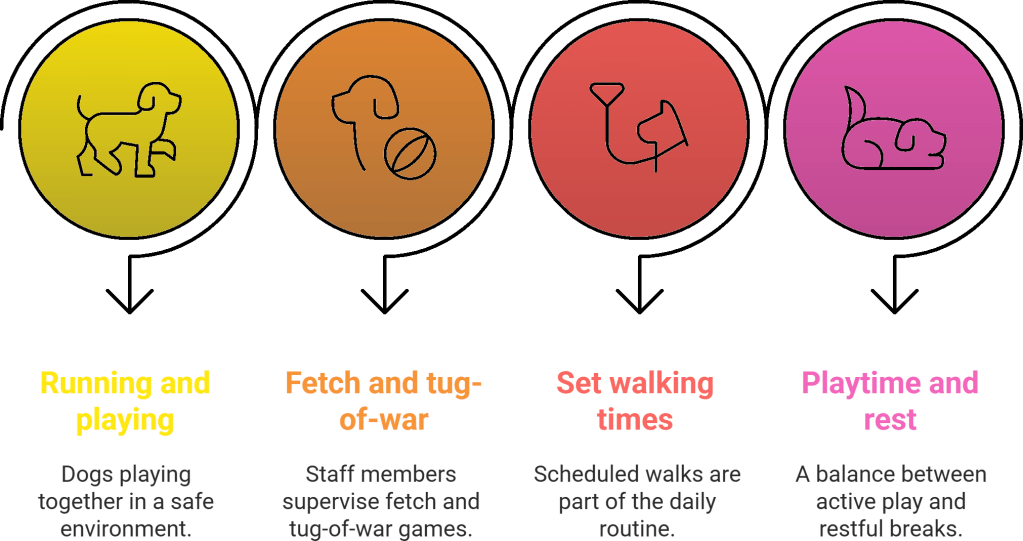
You know what they say – “a tired dog is a happy dog.” Your pet will come home relaxed instead of bouncing off the walls [9].
Cognitive stimulation through play and puzzles
Mental workouts are just as crucial as physical exercise. Dogs need brain teasers to stay sharp, avoid boredom, and feel less anxious [3]. Daycares use puzzles, games, and training to challenge your dog’s mind [12].
These brain exercises can tire dogs out better than just physical play [3]. Good daycares use food puzzles, interactive toys, and smart games to keep your dog’s mind busy [13]. Smart breeds really need these mental challenges to avoid destroying things out of boredom [14].
Better sleep and eating habits
Dogs who spend their day at daycare usually develop better habits at home. Exercise helps them sleep better – most dogs come home ready to crash instead of pacing around for attention [8].
Active dogs also eat more regularly. Playing all day creates natural hunger, which helps picky eaters want their food [15]. The daycare’s routine, with set meal and rest times, creates patterns that stick at home [12].
These benefits work together perfectly: good exercise helps sleep, better sleep boosts appetite and energy, and it all adds up to a happier, more balanced pet [16].
Behavioral Changes You Can Expect at Home
Dog owners see amazing changes in their pets’ behavior at home once they start going to daycare regularly. These changes make perfect sense – they come from the well-laid-out environment, social interaction, and activities that good daycare provides.
Less destructive behavior
Owners quickly notice their dogs stop destroying things around the house. Dogs often chew furniture, dig holes, or damage household items because they have too much energy and feel bored [17]. Dogs who go to daycare spend their day in supervised play and come home tired and ready to relax [17].
Your dog uses up energy at daycare, comes home happy, sleeps well, and wakes up fresh – it’s a positive cycle that keeps repeating. High-energy breeds find healthy ways to use their natural drives, which helps prevent problem behaviors [18]. Of course, many experts prefer daycare over dog walkers because the detailed socialization and activity better tackle the mechanisms of destructive behavior [17].
Improved impulse control
Dogs who attend daycare regularly learn to control themselves better in daily situations. Impulse control means knowing how to resist immediate urges and show restraint [19]. The structured daycare environment teaches dogs valuable skills:
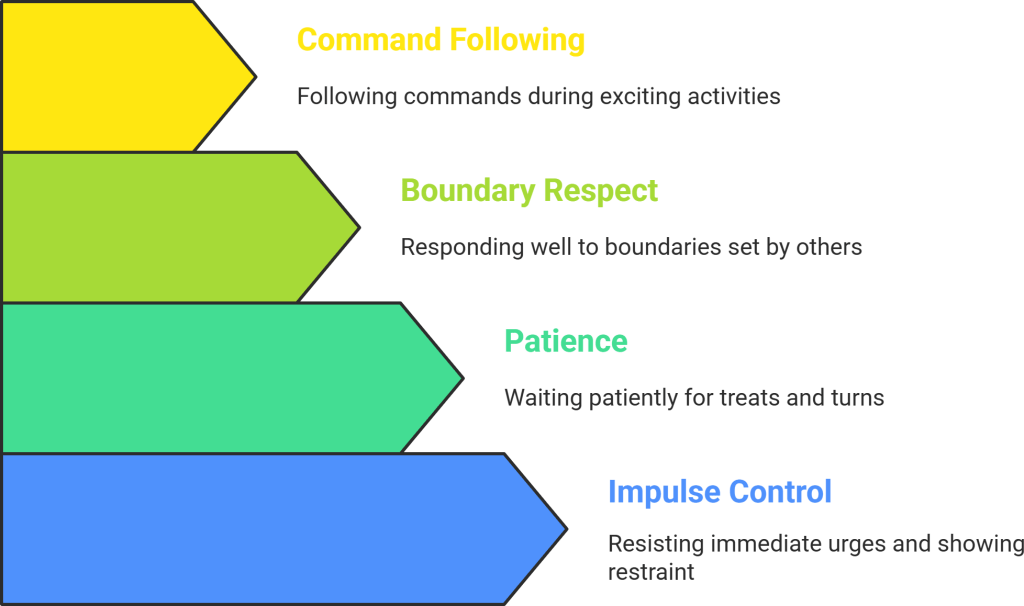
These self-discipline lessons carry over to home life, where owners see their dogs showing more patience and better manners [20]. In fact, this improved self-control makes daily interactions substantially easier, from walking past squirrels without pulling to greeting guests calmly [20].
Reduced separation anxiety
Daycare helps dogs especially when you have separation anxiety. Between 20-40% of dogs with separation anxiety still show symptoms even with regular daycare visits [21]. In spite of that, consistent daycare schedules help many dogs feel more comfortable being apart from their owners [22].
A structured daycare routine creates predictability that reduces anxiety [23]. The mental stimulation and physical exercise prevent stress buildup that shows up as separation-related behaviors [22]. Dogs get used to brief separations during daycare and handle alone time at home more easily [22].
Want to see these positive changes in your dog? Book a stay at Pet Paradise Lakewood Ranch today!
Choosing the Right Daycare for Socialization Success
Choosing the right doggy daycare needs more than simple amenities. Your choice will affect how well your dog grows through social interactions.
What to look for in staff and supervision
Proper supervision is the life-blood of a good dog daycare. The best facilities maintain a staff-to-dog ratio of at least 1:8–10. A ratio of 1:5–7 works best for high-energy playgroups [24]. Staff members should stay in play areas rather than just watch through cameras [25]. You should ask about their training in canine body language, stress signals, and non-physical intervention techniques [25]. Daycare attendants should know the difference between appropriate play and concerning behavior.
Importance of temperament testing
A full temperament test ensures safety before any dog joins the pack. This test shows how well a dog interacts with people and other dogs in social settings [26]. Good assessments take 2-3 hours and have handler introductions, one-on-one dog meetings, and step-by-step group integration [26]. Stay away from facilities that skip this vital step—proper testing makes conflicts much less likely.
Group size and play style matching
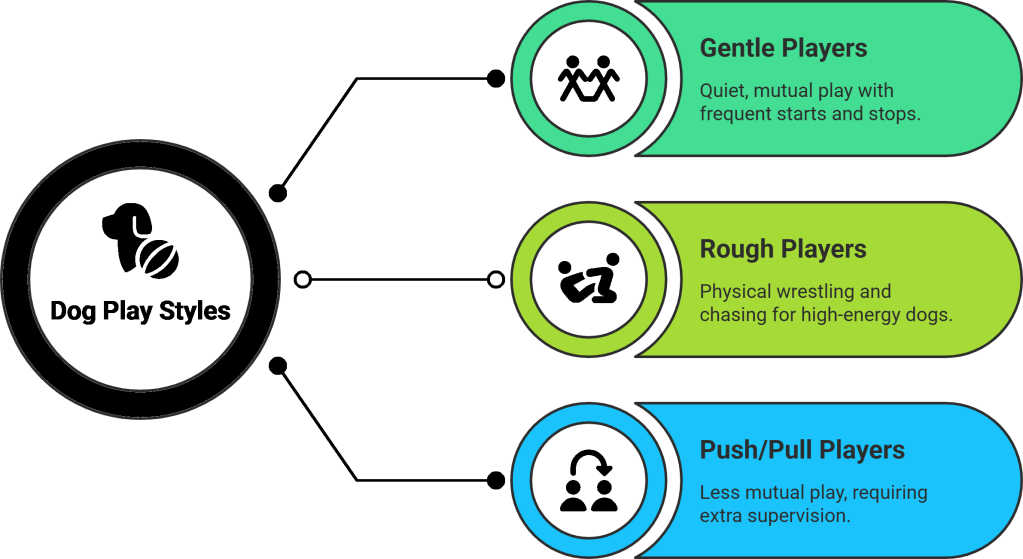
The best daycares keep playgroups to 12-15 dogs at most [27]. They create manageable groups based on size, energy level, and matching play styles. Dogs show these distinct play styles:
Cleanliness and safety protocols
The best facilities follow strict cleaning schedules. Quality daycares do weekly deep cleaning with veterinary-grade disinfectants like Virkon or Neogen and daily spot cleaning [24]. Safety features are also crucial. These include 6-foot fencing minimum [24], two-door barriers between play areas and outdoors [28], and clear emergency and injury protocols [27].
Pet Paradise Lakewood Ranch has all these features and more. Book your dog’s stay today!
Conclusion
Quality dog daycare provides many more benefits than just helping busy pet parents. These facilities give dogs the socialization they need. They create structured environments and physical activities that match your dog’s pack animal instincts.
Dogs who keep taking daycare classes become better at communicating with other dogs. They overcome their fears through positive experiences with other pets. Your dog learns new behaviors by watching other well-adjusted dogs – something that works better than human training alone.
The exercise and mental challenges at daycare lead to a happier, healthier pet. Your dog comes home tired instead of destroying furniture or begging for attention. You’ll see improvements in their sleep, eating habits, and overall happiness.
Maybe even more valuable are the changes you’ll notice at home. Regular daycare visits help reduce destructive behavior. Your dog’s impulse control gets better and separation anxiety decreases. These changes revolutionize your relationship with your pet.
The right facility plays a crucial role in getting these results. Your dog runs on proper staff supervision, temperament testing, and the right group sizes. Safety protocols must be strict and consistent.
A good daycare doesn’t just fill your dog’s time – it helps them develop and stay healthy. Your dog needs more than just watching during your absence. They need opportunities to play, learn, and grow in an environment built around their needs.
Key Takeaways
Dog daycare provides comprehensive benefits that transform your pet’s behavior, health, and overall well-being through structured socialization and expert care.
• Socialization builds confidence: Regular interaction with other dogs improves communication skills, reduces anxiety, and helps dogs learn appropriate behaviors through peer observation.
• Physical and mental stimulation prevents problems: Daily exercise and cognitive challenges at daycare reduce destructive behaviors, improve sleep patterns, and create a calmer, more content dog at home.
• Behavioral improvements transfer home: Dogs attending daycare show better impulse control, less separation anxiety, and fewer destructive tendencies due to proper energy outlets.
• Quality matters in facility selection: Look for proper staff-to-dog ratios (1:8-10), thorough temperament testing, appropriate group sizes, and strict safety protocols for optimal results.
• Structure creates security: Predictable routines and consistent rules at daycare reduce stress levels and help dogs develop emotional resilience and adaptability.
The evidence is clear: well-managed dog daycare goes beyond basic pet-sitting to actively support your dog’s development, creating lasting positive changes that benefit both you and your furry companion.
FAQs
Q1. How does dog daycare improve a dog’s social skills? Dog daycare significantly enhances a dog’s social skills by providing regular interaction with other dogs. This helps them learn appropriate play styles, improve their ability to read social cues, and communicate effectively with other canines. As a result, dogs become more confident and adaptable in various social situations.
Q2. What physical and mental health benefits does dog daycare offer? Dog daycare provides consistent exercise and mental stimulation, which are crucial for a dog’s overall well-being. Regular physical activity helps maintain a healthy weight, improves cardiovascular function, and keeps joints limber. Mental stimulation through puzzles and games prevents boredom and reduces anxiety, leading to better sleep and eating habits.
Q3. Can dog daycare help reduce destructive behavior at home? Yes, dog daycare can significantly reduce destructive behavior at home. By providing ample physical exercise and mental stimulation throughout the day, dogs return home tired and content. This helps prevent boredom-related destructive behaviors like chewing furniture or excessive barking, as dogs have already expended their energy in a positive way.
Q4. How often should a dog attend daycare for optimal benefits? The ideal frequency for dog daycare attendance varies depending on the individual dog’s needs, energy levels, and your schedule. However, many dogs benefit from attending daycare 2-3 times per week. This provides regular socialization and exercise while still allowing for rest days and time at home with their family.
Q5. What should I look for when choosing a dog daycare facility? When selecting a dog daycare, look for facilities with proper staff-to-dog ratios (ideally 1:5-7 for high-energy groups), thorough temperament testing procedures, and appropriate group sizes (12-15 dogs maximum). Additionally, ensure the facility maintains strict cleanliness and safety protocols, including regular sanitation and proper fencing. Staff should be well-trained in canine body language and behavior management.
References
[1] – https://animalarkrescue.com/dog-play-styles/
[2] – https://www.madisonanimalcare.com/how-do-doggy-daycare-sessions-improve-your-dogs-behavior-at-home
[3] – https://www.petmd.com/dog/general-health/ways-to-keep-dog-mentally-stimulated
[4] – https://ruffgers.com/how-socialization-at-daycare-improves-your-dogs-behavior/
[5] – https://performancek9training.com/the-transformative-power-of-doggy-daycare-socialization/
[6] – https://www.womanaroundtown.com/contributed/pack-mentality-how-daycare-shapes-better-behaved-dogs/
[7] – https://www.loganshouse.com/the-benefits-of-socialization-for-dogs-and-how-daycare-helps
[8] – https://www.dogtopia.com/austin-north/the-importance-of-exercise-for-your-dog-how-dog-daycare-keeps-your-pup-active-and-healthy/
[9] – https://www.drboyds.com/blog/the-top-benefits-of-dog-daycare-a-home-away-from-home
[10] – https://seapawsdogresort.com/from-wiggles-to-wellness-how-doggy-daycare-supports-your-pets-physical-and-mental-health/
[11] – https://www.greenacrespetresort.com/blog/how-to-provide-essential-exercise-for-dogs/
[12] – https://www.dogtopia.com/downtown-orlando/the-positive-effects-of-dog-daycare-a-tail-wagging-experience/
[13] – https://www.akc.org/expert-advice/training/fun-cognitive-training-games-for-dogs/
[14] – https://www.halocollar.com/blog/dog-health/the-power-of-play-how-playing-can-improve-your-puppys-mental-and-physical-health/?srsltid=AfmBOor5Zv_2ioQUQVxZiPVtXzjEswQbW3ecutlofuxaiE1mJmkZv6ot
[15] – https://fonjonpetcare.com/understanding-your-dogs-behavior-after-daycare-what-to-expect/
[16] – https://www.alldogsrock.com/all-dogs-rock/the-truth-about-doggy-daycare-is-it-worth-the-investment/
[17] – https://www.dogtopia.com/blog/how-daycare-affects-dog-behavior/
[18] – https://animalpeoplecompany.com/why-dog-day-care-is-essential-for-high-energy-breeds-a-behavioral-perspective/
[19] – https://dogdaysglasgow.co.uk/lets-talk-pet-insurance-2/
[20] – https://thebarkknoxville.com/why-is-your-daycare-dog-so-energetic/
[21] – https://www.caninetofive.com/does-dog-daycare-help-with-separation-anxiety/
[22] – https://www.pawsnrec.com/how-dog-daycare-can-help-reduce-separation-anxiety/
[23] – https://thegrandpaw.com/can-dog-daycare-help-with-behavioral-issues/
[24] – https://www.preventivevet.com/dogs/how-to-choose-a-dog-daycare
[25] – https://thedoggurus.com/blog/supervision-dogs-excellent-daycares/
[26] – https://dogcityseattle.com/temperament-details-and-faqs/
[27] – https://www.mainedogtrainingco.com/blog/dog-daycares-not-all-are-created-equal/
[28] – https://www.directanimal.com/pet-daycare-resources/safety-measures-every-dog-daycare-should-have/
 Clear Peak Marketing
Leave a comment