
Modern brands have discovered their secret weapon – meme marketing. Research shows that brands using memes in their communication see 60% higher purchase intent from customers. The numbers tell an impressive story. The global meme market reached $2.3 billion in 2020, and experts predict it will soar to $6.1 billion by 2025.
The statistics paint a clear picture of this phenomenon’s rapid growth. Young people aged 13 to 35 are avid meme sharers – 30% send them daily and 55% share them weekly. Instagram has become a meme-sharing powerhouse where users post over one million memes each day. These branded memes succeed because their visual format creates emotional connections and makes them perfect to share. Brands that accept new ideas now treat memes as authentic conversations with their audience rather than just content.
Let’s explore meme marketing’s role in connecting with Gen Z and how your brand can utilize this cultural shift. We’ll analyze successful brand memes and give you practical steps to create engaging content. Memes could be the key element your marketing strategy needs right now.
What makes meme marketing so effective
The magic of meme marketing goes beyond humor—it taps into psychological triggers that make these shareable images work amazingly well for brands to communicate. Memes create instant connections through shared experiences and cultural references that strike a chord with audiences in ways traditional advertising can’t match.
Memes as emotional triggers
Memes work as emotional catalysts. Research shows people share content more often when it stirs up strong emotions—good or bad [1]. This emotional connection makes memes powerful. They spark instant reactions from joy to nostalgia and create a dopamine rush that builds positive links to your brand [2].
Memes capture universal experiences and package complex emotions into simple visual formats [2]. Studies confirm that viewers react to memes with different emotions like joy, anger, or frustration [3]. This emotional range makes them effective marketing tools in a variety of situations.
Memes help people deal with stress. People feel more in control when they laugh at relatable situations [2]. Your brand becomes part of this positive emotional experience. You’re not just selling anymore—you’re making a human connection.
The psychology of sharing
People’s reasons for sharing memes show why they’re such effective marketing tools. Sharing memes works like social currency. It lets people show off their personality and humor to their networks [4]. Several key factors drive this sharing behavior:
On top of that, meme engagement gives instant rewards. Their quick, bite-sized nature fits perfectly with today’s shorter attention spans [6]. Brands see the results—memes in social media ads get 30% engagement compared to Google AdWords’ 1% click-through rate [7].
Why branded memes feel authentic
Branded memes’ authenticity might be their biggest marketing advantage. Traditional ads often sound scripted and promotional, but memes feel natural and genuine [4]. This authenticity bridges the gap between corporate messages and everyday chat.
Memes break down walls between brands and consumers. Companies that show cultural awareness and communicate like their audience seem more human [4]. So branded memes create emotional connections that often lead to loyal customers [8].
Memes invite people to participate rather than just receive messages. They promote two-way communication. Passive viewers become active participants who share, comment and remix content [4]. This makes audiences feel like they’re sharing an inside joke instead of being marketed to [5].
Subtle meme marketing by brands gets better results by creating immersive experiences through storytelling—especially with people who don’t know the brand well [7]. Memes let brands connect through cultural relevance instead of direct selling. This makes them feel more like friends than corporations.
Success stories: brands that nailed meme marketing
The biggest brands today have turned memes into a marketing powerhouse. They build loyal followers and get amazing engagement. Their success shows how memes can change brand communication when brands get creative and stay authentic.
Netflix and the art of platform-specific memes
Netflix knows exactly how to create platform-specific memes that connect with viewers under 35 [4]. The streaming giant makes use of its huge content library to create relatable, funny memes that promote shows while feeling natural on social media [9].
Their team floods social media with memes using images from their shows to build interest and familiarity [9]. This worked really well during their “Bird Box” campaign. They jumped on the viral blindfolded challenge trend and got people talking [9].
The social media team at Netflix creates timely, self-aware memes that work perfectly for each platform’s audience [7]. For their thriller “You,” they made relatable Joe Goldberg memes that drew viewers to the show [7]. This smart approach helped their Instagram meme campaign for “The Witcher” boost organic social impressions by 60% in just two days [10].
Wendy’s and roast culture
Wendy’s changed the game for brand personality on social media with bold, sassy memes. The fast-food chain became prominent through its “roast” campaign. They posted funny responses to followers and competitors [11]. Their clever and sometimes snarky comebacks turned customer chats into viral marketing gold [12].
National Roast Day (January 4) became their campaign’s highlight, where anyone could ask to be roasted [6]. Gordon Ramsay wanted in on the action, so Wendy’s used the Spider-Man pointing meme to show how their witty social style matched Ramsay’s fiery kitchen persona [7].
Wendy’s loves to roast competitors, especially McDonald’s. A Twitter user asked about the nearest McDonald’s, and Wendy’s just replied with a trash can emoji [6]. Their 2023 TikTok National Roast Day ran for three days and got 116 million views, reaching 30% of users [6]. The campaign boosted Ad Recall by 37.4% and Awareness by 28.1% [6].
Spotify’s minimalist meme approach
(Note: Limited information was available on Spotify’s specific meme approach in the factual keypoints.)
Examples of memes that boosted engagement
Many other brands have made meme marketing work in different industries. McDonald’s pokes fun at itself – something Gen Z loves [4].
Dollar Shave Club, famous for their funny launch video, uses memes to sell products creatively. They marketed their “Ball Spray” with a hilarious scene from “Spirited Away” to show how well it works [4].
Education brands are getting in on the action too. SparkNotes creates Instagram memes that make literature fun and easy to understand. They connect with students through humor instead of traditional teaching methods [4]. This makes learning more fun without being boring or preachy.
G Fuel showed smart timing when YouTube removed its dislike button. They made memes about this trending topic that didn’t push products but got attention by standing with users who shared their viewpoint [4].
These successful brand memes have common traits: they’re current, genuine, and balance humor with brand identity [7]. They make companies feel more like friends than corporations, which drives real engagement and business results.
How to create memes that match your brand
Brands that involve memes thoughtfully in their marketing see higher engagement rates than traditional content formats. Your success depends on understanding internet culture and marketing goals. Studies have proven this repeatedly.
Understanding your audience’s humor
Your meme marketing strategy starts with complete audience research. You need to study your demographic’s priorities and what type of humor resonates with them. The content that makes your audience laugh shapes your meme strategy. B2B audiences appreciate industry-specific jokes that showcase your expertise. Younger demographics connect better with irreverent content.
You can understand your audience’s humor priorities by:

Generic content might feel safer, but audience-specific humor builds stronger connections. “We don’t want to get canceled, we don’t want to be seen as tone-deaf, and we don’t want to be cringe. You solve all three if you have awareness of your niche and industry.”
Aligning memes with brand tone
Your brand voice must match even the funniest meme. Every meme should strengthen your brand identity. Sophisticated wordplay suits professional companies better than slapstick humor. Brands with relaxed personalities can accept more irreverent content.
Recognition grows through consistency. Netflix’s self-aware humor and Wendy’s witty retorts work because they match their long-established brand personalities.
Using trending formats without losing identity
Meme marketing thrives on perfect timing. Viral trends keep you culturally relevant. Rushing without understanding can backfire badly. Before using any meme format, you should:
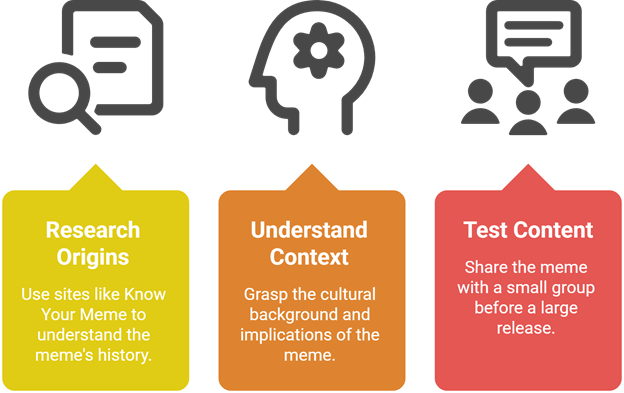
Cultural awareness combined with originality works best. Your brand should customize trending memes while keeping their recognizable format rather than simply reposting them.
Brand meme vs. viral meme: knowing the difference
Choosing between original content and adapting existing formats is vital:
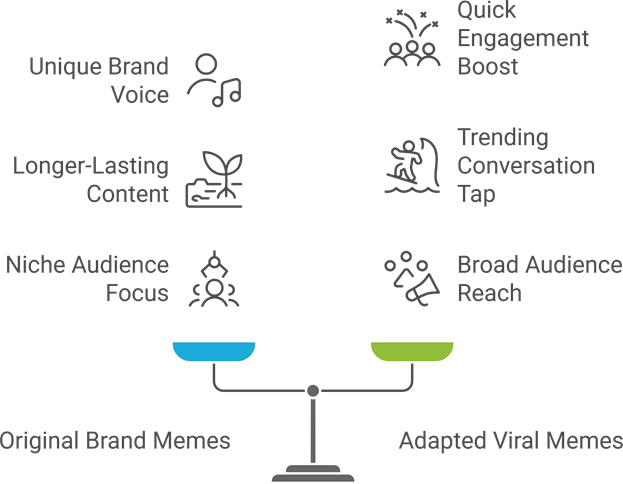
Both approaches keep your content fresh, relatable, and ahead of competitors. Authenticity remains the foundation of effective meme marketing, whatever path you choose.
Meme marketing across industries
Different industries have come up with creative ways to use meme marketing that resonates with their target audiences. Designer brands and healthcare providers have found that humor creates a direct connection with their customers.
Retail and fashion: style meets humor
Luxury fashion brands used to keep an exclusive image. Now many of them use memes to seem more relatable. OPI nail products made clever use of the “Sorry, I have plans” meme format. They promoted staying in for self-care nights with their products instead of going out. This strategy fit perfectly with people’s growing interest in personal wellbeing.
High-fashion brand Loewe picked the perfect moment to join the viral “Is it cake?” trend. They posted their signature bags next to amateur cake copies and asked viewers to spot the real one. Gucci also scored a win with their #TFWGucci (“That Feeling When Gucci”) campaign. They got social media creators to make witty memes about their watch collection. This helped them boost engagement while they kept their brand image intact.
Tech: memes about glitches and remote work
Tech brands naturally take to meme marketing because their audience lives in the digital world. These companies often joke about common industry issues—software bugs, remote work problems, and tech frustrations their customers face every day.
Zoom captured the reality of working from home perfectly. Their memes showed professionals wearing formal clothes on top but casual wear below for video calls. Semrush also hit the mark with their meme of a guinea pig labeled “attachment” trying to squeeze through an “email” chute. This resonated with people who deal with digital marketing challenges.
Education: relatable student life memes
Schools and learning platforms have found that memes work great as teaching tools. SparkNotes turned their Instagram feed into a hit by using memes to make literature more fun and available. They connected with students through humor instead of traditional teaching methods.
Studies back this approach—85% of students say creating memes helped them remember what they learned. Even better, 99% of those who found it helpful also enjoyed it. Memes stay popular across different age groups, with 75% of 13–36-year-olds sharing them often.
Healthcare: using memes to debunk myths
Healthcare groups now use memes more often to fight false information and explain complex topics. Medical pros create content that tackles common myths while staying professional.
HIPAA rules provide surprising material for healthcare humor. Organizations run “Friday Funnies” to explain patient privacy rules clearly. Pharmacology teachers have also found that memes help simplify difficult concepts. One study revealed medical students gave meme use in education a 4.81 out of 5 rating to make course material more engaging and relatable.
Future of meme marketing in 2025 and beyond
Traditional advertising will lose its impact by 2025 as attention spans get shorter. Meme marketing has emerged as the best way for brands to connect with younger audiences.
AI-generated memes and automation
AI has changed how we create memes. Tools like Supermeme.ai, MemeCam, and ChatGPT analyze humor patterns and audience reactions to create custom content in seconds [5]. These systems learn from existing meme formats and joke structures to generate content that matches popular humor styles [5]. AI meme generators help marketers save time and learn about what strikes a chord with specific groups [13].
Interactive and remixable meme formats
Memes that encourage people to participate are the future. People love interactive formats with polls, “tag a friend” prompts, and templates they can remix [14]. Brands now try formats that mix memes with interactive content. Instagram meme carousels with “choose your own adventure” style and TikTok meme challenges tied to campaigns are good examples [14]. These elements that encourage participation boost engagement. They create conversations instead of one-way marketing messages.
Memes as merch and physical branding
Memes now go beyond digital spaces to become real products. Viral catchphrases on tote bags and iconic images as stickers are great ways to extend campaign lifespans [14]. Gen Z loves items that reference internet culture, which turns inside jokes into fashion statements [15]. Limited-edition meme products often become collectibles that keep brands relevant longer.
Cross-brand meme collaborations
The “Barbenheimer” phenomenon showed how unexpected brand pairs can create amazing buzz [16]. More companies will join forces to create crossover memes that blend their audiences’ interests [14]. A fast-food chain might team up with a gaming brand to make memes about late-night gaming snacks [14]. These mutually beneficial alliances help brands reach new audiences while keeping their content fresh and real [17].
Conclusion
Meme marketing has grown from a fun experiment into a crucial strategy that brands use to connect with younger audiences. This piece shows how memes create emotional triggers that get people talking more than traditional ads ever could. The numbers tell an interesting story – branded memes see 30% engagement while Google AdWords sits at just 1% click-through rates.
Look at brands like Netflix, Wendy’s, and Spotify. They’ve shown that memes work in a variety of industries if you understand the culture and stay true to your brand’s voice. Their different approaches – from platform-specific content to witty roasts and minimalist designs – share three key elements: perfect timing, genuine feel, and the right mix of humor with brand message.
Making memes that work means knowing your audience’s sense of humor while keeping your brand’s personality intact. This becomes even more critical as we look toward 2025. AI-generated content, interactive formats, merchandise you can touch, and brands working together will shape the next big wave of meme marketing breakthroughs.
Modern consumers want real conversations with brands, not just one-way messages. The younger generation strikes a chord with companies that talk like friends instead of corporations. Your brand’s social media presence could use some meme magic. Let’s create a meme strategy that connects with your audience and gets people talking.
People’s attention spans keep getting shorter. Traditional ads don’t pack the same punch anymore. Memes are the answer – quick, shareable content that builds real emotional connections. Brands jumping on this cultural wave now will find themselves ahead of others stuck in old-school marketing. Sometimes the best marketing isn’t a polished ad but a simple meme that makes people think “That’s exactly us.”
Key Takeaways
Meme marketing isn’t just a trend—it’s a proven strategy that generates 30% engagement rates compared to traditional advertising’s 1% click-through rate, making it essential for connecting with Gen Z audiences.
Memes work as emotional triggers that create instant connections through shared experiences, generating dopamine releases that build positive brand associations • Successful brands like Netflix and Wendy’s prove authenticity matters more than perfection—memes should feel like genuine conversations, not corporate messaging • Understanding your audience’s humor and aligning memes with your brand voice is crucial for creating content that resonates without losing brand identity • AI-generated memes and interactive formats will dominate 2025, offering brands new ways to create participatory content that invites audience engagement • Cross-industry success shows memes work everywhere—from luxury fashion to healthcare—when they address real audience pain points with appropriate humor
The future belongs to brands that can communicate as peers rather than corporations, turning marketing messages into shareable cultural moments that audiences genuinely want to engage with.
FAQs
Q1. Why is meme marketing effective for reaching Gen Z? Meme marketing resonates with Gen Z because it uses relatable, shareable content that aligns with their communication style. It creates emotional connections through shared experiences and humor, making brands feel more authentic and less like corporations.
Q2. How can brands create effective memes without losing their identity? Brands can create effective memes by understanding their audience’s humor preferences, aligning the content with their brand voice, and using trending formats while maintaining their unique identity. It’s crucial to strike a balance between being culturally relevant and staying true to the brand’s personality.
Q3. What are some successful examples of meme marketing? Netflix has mastered platform-specific memes to promote their shows, while Wendy’s gained popularity through their witty “roast” campaign. Other brands like McDonalds and Dollar Shave Club have also successfully used self-deprecating humor and creative product promotion through memes.
Q4. How is meme marketing evolving for the future? The future of meme marketing includes AI-generated content, interactive and remixable formats, memes as physical merchandise, and cross-brand collaborations. These innovations will allow for more personalized, engaging, and participatory meme experiences.
Q5. Can meme marketing work across different industries? Yes, meme marketing can be effective across various industries. Retail and fashion brands use memes to appear more approachable, tech companies address common industry problems, educational institutions make learning more engaging, and healthcare organizations use memes to debunk myths and explain complex topics.
References
[1] – https://www.psychologytoday.com/us/basics/memes
[2] – https://www.forbes.com/sites/traversmark/2024/07/16/3-things-the-memes-you-share-say-about-you-by-a-psychologist/
[3] – https://www.researchgate.net/publication/385580284_Memes_in_Marketing_Impact_on_Advertising_Literacy_and_Emotional_Experience_Among_Adolescents
[4] – https://wyzowl.com/meme-marketing/
[5] – https://www.contentgrip.com/ai-meme-marketing-gen-z-humor/
[6] – https://mediashower.com/blog/wendys-roast-campaign/
[7] – https://www.superside.com/blog/meme-marketing-examples
[8] – https://www.imarkinfotech.com/how-meme-marketing-can-transform-your-brand/
[9] – https://www.adobe.com/express/learn/blog/meme-marketing
[10] – https://www.linkedin.com/pulse/how-netflix-markets-its-originals-through-strategic-zofcc
[11] – https://socialsci.libretexts.org/Courses/Southern_Illinois_University_Edwardsville/Social_Media_for_Public_Relations/04%3A_Social_Media_for_PR_Case_Studies/4.03%3A_Case_study_Wendys_social_media_success_with_the_Roast_campaign
[12] – https://www.pennep.com/blogs/how-wendy-s-twitter-roasts-became-a-viral-marketing-phenomenon
[13] – https://smythos.com/managers/marketing/ai-meme-generators-and-how-do-they-work/
[14] – https://www.socialnectar.net/marketing-meme-trends-2025/
[15] – https://merchinformer.com/mining-meme-culture-for-t-shirt-inspiration/
[16] – https://www.swarna.agency/post/the-barbenheimer-effect-and-the-power-of-cross-branding
[17] – https://thephagroup.com/blog/cross-brand-collaborations/
 Clear Peak Marketing
Leave a comment